

Table of Contents
- Online Marketplaces and Your Own Digital Storefront
- Selling Crafts at Local Markets and Craft Fairs
- How to Price Handmade Crafts for Profit
- Legal Requirements for Selling Crafts
- Marketing and Building a Brand Identity
- Shipping, Logistics, and Fulfillment
- Taxes, Accounting, and Platform Migration
- Conclusion
- Frequently Asked Questions
Last Updated: September 15, 2026
Online Marketplaces and Your Own Digital Storefront
Finding the right home for your work starts with one question: do you want to rent space on someone else's shelf, or build your own? For most makers, the answer is both. This guide from Artists of Elements walks through where to sell handmade crafts in 2026, from online marketplaces to local markets and consignment.
The biggest mistake new sellers make is treating platform choice as permanent. It isn't. You can test a marketplace this month and open your own storefront next month.
Marketplace vs. Independent Website
An online marketplace is a third-party platform that hosts your listings, handles checkout, and brings its own shopper traffic. An independent website is a storefront you own and control, with no built-in audience but no platform rules either.
The trade-off is simple. Marketplaces give you traffic and take a cut. Your own site gives you margin and brand control, but you have to earn every visitor. Many sellers run both: a marketplace for discovery, a personal site for repeat customers.
Selling Crafts at Local Markets and Craft Fairs
Craft fairs remain the fastest way to test whether a product actually sells. You get immediate feedback, cash in hand, and a face-to-face read on what shoppers pick up versus what they walk past.
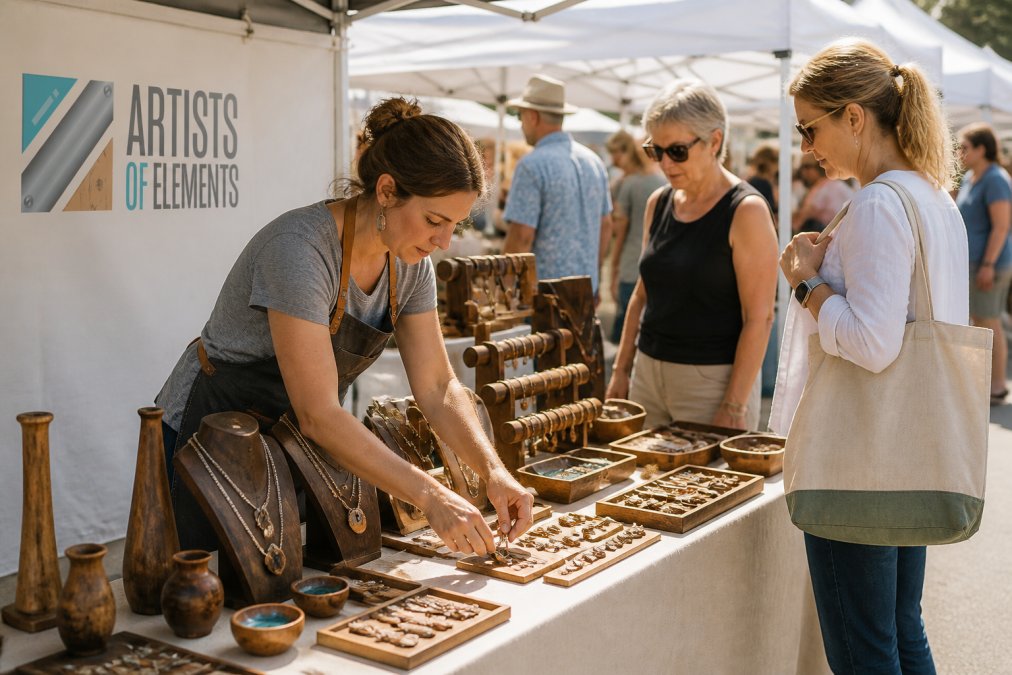
A common mistake is underpricing at fairs to move inventory. That trains your local market to expect bargain prices and makes it harder to raise them later. Price consistently across every channel.
Pop-Up Shops and Consignment
Pop-up shops are short-term retail spaces, often rented by the day or weekend, where you set up and sell directly. Consignment is different: a shop displays your work and pays you after it sells, usually keeping a percentage.
Consignment lowers your upfront risk but slows your cash flow. Pop-ups cost more upfront but pay out immediately. If you are new to in-person selling, start with a pop-up or a shared booth before committing to a consignment agreement.
How to Price Handmade Crafts for Profit
Pricing is where most makers quietly lose money. The formula that works is materials plus labor plus overhead, then multiplied for profit.
- Materials: every component, including packaging and tags
- Labor: your hourly rate times hours worked, at a real wage
- Overhead: booth fees, tools, software, and travel
- Profit margin: a markup on top, not an afterthought
A common mistake is paying yourself nothing and calling the remainder profit. It isn't. If a piece takes three hours and you pay yourself a fair hourly rate, that cost belongs in the price.
Pro Tip Track your hours on your first ten pieces. Most makers underestimate build time by a wide margin, and that gap is exactly where profit disappears.
Legal Requirements for Selling Crafts
Before your first sale, handle the basics: a business license where required, a sales tax permit, and clear records of every transaction. Requirements vary by state and city, so confirm the rules that apply to you rather than assuming.
Business Structure and Registration
Most solo makers start as a sole proprietor, which requires no formal filing beyond any local business license. As revenue grows, many switch to a single-member LLC for liability separation. An Employer Identification Number (EIN) from the IRS is free and useful even for sole proprietors, because it keeps your Social Security number off vendor forms. Register your business name with your state if you are not operating under your own legal name.
Sales Tax and Nexus
Sales tax is the requirement that trips up new sellers most. The core concept is nexus: the connection between your business and a state that obligates you to collect tax there. Physical nexus exists where you live, store inventory, or attend fairs. Economic nexus is triggered when you cross a state's sales threshold, which many states set at a dollar amount or a transaction count. Once you have nexus, you register in that state, collect tax on taxable sales, and remit on the state's filing schedule.
Marketplace Facilitator Rules
If you sell on a large marketplace, marketplace facilitator laws in most states make the platform responsible for collecting and remitting sales tax on your behalf. That does not remove your obligation to register and file in states where you have nexus. Keep your own records of gross sales by state, because your income tax filing still depends on them.
Resale Certificates
When you buy materials to resell as part of a finished product, a resale certificate lets you purchase them without paying sales tax at the register. Rules on which materials qualify vary by state. Ask your supplier and your state revenue department before assuming a purchase is exempt.
Product Safety and Labeling
Product safety matters too. Items for children, anything worn against skin, and food-adjacent goods can carry labeling and testing requirements. Children's products in particular fall under federal rules that may require testing and tracking labels. When in doubt, ask before you list.
Recordkeeping
Keep receipts for materials, booth fees, shipping supplies, and software. These are deductible business expenses, and without records you cannot claim them. A separate bank account and a simple spreadsheet by category will save you hours at tax time.
Check the IRS small business and self-employed tax center for federal guidance, and your state revenue department for local rules.
Marketing and Building a Brand Identity
Your brand is the reason someone picks your booth over the one beside it. That means a consistent name, a recognizable look, and a story people can repeat.
- Product photography: shoot in natural light against a clean, neutral background
- Target audience: know who buys, not who might
- Social commerce: post process videos, not just finished pieces
- Email marketing: collect addresses at every fair and follow up
- SEO optimization: use the words shoppers actually type
Brand awareness compounds slowly, then quickly. The makers who post consistently for a year outperform the ones who post perfectly for a month.
Shipping, Logistics, and Fulfillment
Shipping is the part of selling that surprises people most. Fragile, heavy, or oddly shaped items need real packaging, and that cost belongs in your price, not your margin.
Dimensional Weight and Carrier Rates
Carriers bill on dimensional weight, not just actual weight. That means a large, light box can cost more to ship than a small, heavy one. Measure your packed box, not the item. Compare rates across USPS, UPS, and FedEx for your typical box sizes, and check whether a flat-rate option beats a calculated rate for your heaviest items.
Service Tiers and Tracking
First-class and ground services are cheapest but slowest. Priority and expedited services cost more and set buyer expectations higher. Add tracking to every order, because untracked packages create disputes you cannot win. Insure high-value pieces; the cost is small relative to a total loss.
Packaging That Protects Margin
Standardize packaging so fulfillment stays fast. Buy boxes, tape, and void fill in bulk once you know your common sizes. For fragile work, double-box or use foam-in-place. Charge shipping as a line item or build it into price, but never absorb it silently.
Inventory Sync Across Channels
Fulfillment Options
Niche Differences
Watch Out Selling the same one-of-a-kind piece on two platforms without syncing inventory is the fastest route to a refund, a bad review, and a lost customer.
Taxes, Accounting, and Platform Migration
Conclusion
Frequently Asked Questions
Where is the best place to sell handmade crafts?
The best place depends on your goals. Online marketplaces offer reach but charge listing and transaction fees. A digital storefront gives you control over branding and customer data. Local markets and craft fairs build community and allow face-to-face selling. Many successful makers use a mix: online for steady sales and local events for brand awareness. Start with one channel, learn what works, then expand.
Do I need a business license to sell handmade crafts?
It varies by state and city. Most places require a general business license or a seller's permit to collect sales tax. Some jurisdictions also have zoning rules for home-based businesses. Check with your local clerk's office and state revenue department before you start selling. Filing as a sole proprietorship is common for new crafters, but an LLC can offer liability protection as you grow.
How do I price my handmade crafts for profit?
Start by calculating your material costs, then add your hourly labor rate. A common formula is (materials + labor) x 2, but that is just a baseline. Factor in overhead like tools, packaging, and marketplace fees. Research what similar items sell for in your niche market. Do not undervalue your work. Handcrafted items carry a premium because they are one-of-a-kind. Adjust based on customer feedback and profit margins.
What crafts are in high demand right now?
Woodworking, jewelry, ceramics, and personalized gifts consistently sell well. Home decor and functional art like bottle stoppers or custom pens also have steady demand. Seasonal items spike around holidays. The key is finding a niche market where your style stands out. Local trends matter too, so visit craft fairs and pop-up shops in your area to see what shoppers are buying.
How can I sell my crafts locally without a storefront?
You have several options. Craft fairs and local markets let you set up a temporary booth. Pop-up shops in vacant retail spaces or community venues work well for short-term sales. Consignment with local boutiques or galleries puts your work in front of shoppers without rent. Some makers also host home shows or partner with coffee shops and studios to display their items. Community hubs often rent space for workshops and sales.
What are the legal requirements for selling handmade goods?
Most sellers need a business license, a seller's permit for sales tax, and possibly a tax ID number. If you sell food or cosmetics, additional health permits apply. Product safety rules cover items for children. Labeling requirements vary by product type. Keep records of all sales and expenses for tax filing. Consult a local accountant or small business advisor to make sure you meet all legal requirements for selling crafts in your area.