

Table of Contents
- Why Handmade Art Beats Mass Production
- How Buying Handmade Keeps Money in the Local Economy
- Why Handmade Gifts St. Pete Shoppers Choose Carry More Meaning
- One-of-a-Kind Pieces: No Two Are Ever the Same
- Custom Woodworking St. Petersburg: What You Can Commission
- How to Support Local St. Petersburg Artists All Year
- Frequently Asked Questions
Last Updated: September 25, 2026
Why Handmade Art Beats Mass Production
Walk into any big-box store and you'll see the same vase, the same candle holder, the same cutting board, stacked a hundred deep. Buying handmade art from locals is the opposite of that experience. It's one object, made once, by a person you can actually meet.
The Story Behind Every Piece
Mass-produced goods have no story. They have a barcode.
A handmade piece carries its maker's decisions. Which wood, which grain direction, which finish. Our Black Walnut Handmade Slimline Pen started as a rough block with sharp corners that most people would have walked past. It got turned cross-grain anyway, and the grain opened up in a way straight cutting never could.

Quality You Can Feel in Your Hand
Run your thumb along the seam of a factory-made pen. Now do it on a hand-turned one. The difference isn't marketing. It's sanding.
Factor |
Mass Production |
Handmade |
|---|---|---|
Quantity |
Thousands identical |
One of a kind |
Materials |
Whatever is cheapest |
Chosen piece by piece |
Finishing |
Sprayed, rushed |
Sanded and polished by hand |
Story |
None |
Documented, often filmed |
Repair |
Replace it |
Often repairable |
How Buying Handmade Keeps Money in the Local Economy
Money spent with a local maker stays closer to home. It pays for materials bought nearby, tools sharpened down the street, and a studio rent that keeps a neighborhood alive.
The Mechanism, Step by Step
Here's what actually happens when you buy a handmade wooden gift instead of a factory version:
- You pay the maker directly. No distributor, no importer, no regional warehouse takes a cut first.
- The maker buys raw stock locally. A woodworker restocking walnut or maple typically sources from a nearby lumber yard or specialty hardwood dealer, not a container ship.
- The maker pays local service providers. Saw blades get sharpened, lathe bearings get replaced, finishes get replenished, usually by small businesses within driving distance.
- The maker pays local rent. In a district like the Warehouse Arts District, that rent supports landlords, utilities, and neighboring businesses that depend on foot traffic from studio visits.
- The maker pays themselves, and spends locally. Groceries, gas, childcare, coffee, the same dollars cycle again.
Why This Matters More for Art Than for Other Purchases
Most local-spending arguments apply to any small business. Handmade art is a special case because the labor itself is the product. When you buy a hand-turned pen or a scroll saw wood word art piece, the largest share of what you paid went to a person's hands and hours, not to materials, packaging, or shipping. That means more of your dollar lands directly in a local household.
The Trade-Off You Should Know About
Local handmade is not always cheaper. It usually isn't. A factory can produce a cutting board for less because it buys wood by the truckload, runs one shape on one machine for a week, and pays wages set by a market you'll never see. A local maker buys in small batches, changes setups constantly, and prices in their own time.
Key TakeawayEvery dollar spent with a local maker recirculates through nearby suppliers and services before it leaves the area. The chain is longer, the recipients are people you could actually meet, and the piece you bought can be repaired by the same hands that made it.
Why Handmade Gifts St. Pete Shoppers Choose Carry More Meaning
A handmade gift says something a gift card can't: I thought about you specifically.
- For the bourbon drinker: a turned black walnut stopper that fits their favorite bottle
- For the wine lover: a lacewood stopper with a grain pattern most people have never seen
- For a milestone: a custom ring made together, not ordered online
- For the holidays: a hand-carved, hand-painted ornament signed by the artist
One-of-a-Kind Pieces: No Two Are Ever the Same
Here's the honest truth about handmade: you cannot order the same thing twice.

How to Tell Genuine Handmade from 'Handmade-Style'
A lot of mass-produced goods now borrow the language of craft without the craft. Here's how to check before you buy:
- Look for tool marks, not perfection. Hand-turned wood shows faint concentric rings, slight variations in wall thickness, and a surface that shifts under raking light. A perfectly uniform, glass-smooth, identical-to-its-neighbor finish usually means a CNC machine and a spray booth.
- Check the grain continuity. On a hand-shaped piece, grain flows logically around curves because the maker oriented the blank deliberately. On a molded or veneered piece, grain often runs against the form or repeats identically across units.
- Ask about the finish. A real maker can name the product, tung oil, shellac, wipe-on poly, beeswax blend, and explain why they chose it. A reseller usually can't.
- Ask what happens if it breaks. A maker will offer to repair or refinish. A retailer will point you to a return policy.
- Look for a signature or mark. Many woodworkers sign or brand their work, often on the underside or inside a lid. It's not universal, but it's a strong signal.
- Ask to see the process. At Artists of Elements, pieces are made on the Sawdust and Friends podcast, so the work is on record. That's the strongest verification there is, you can watch the piece being made before you decide.
How to Care for a Handmade Wooden Piece
Most articles about buying handmade stop at the 'why.' This is the part that keeps the piece looking right for decades.
Black Walnut, Purple Heart & Curly →
For pens, rings, bottle stoppers, and small turned items:
- Wipe with a soft dry cloth. Avoid soaking in water or leaving in a hot car.
- Reapply a thin coat of paste wax or the maker's recommended finish once or twice a year, or whenever the surface looks dull.
- Keep wood rings away from prolonged moisture and harsh soaps; remove before dishes, showers, or swimming.
For wooden earrings and word art:
- Store out of direct sun to slow color shift, especially in lighter woods.
- Dust with a dry microfiber cloth rather than a damp one.
- Handle scroll saw pieces by the frame, not the thin cut details.
For custom furniture, built-ins, and frames:
- Dust regularly with a dry cloth; avoid silicone-based polishes, which can build up and interfere with future refinishing.
- Keep furniture out of direct sun and away from heating vents to reduce seasonal movement.
- Use coasters and felt pads. Wood moves with humidity, small cracks and seasonal gaps are normal, not defects.
- If a finish gets scratched, contact the maker before sanding. Most scratches can be repaired locally without stripping the whole piece.
The Practical Payoff
A one-of-a-kind piece is only one-of-a-kind as long as it survives. Care instructions aren't fine print, they're what separates a handmade object you keep for thirty years from one you replace in three. Ask the maker how to care for your piece before you leave the studio. A real one will be glad you asked.
Watch OutIf you fall in love with a piece and walk away to 'think about it,' understand the risk. One-of-a-kind means exactly that. When it sells, it's gone, and the maker cannot recreate it.
Custom Woodworking St. Petersburg: What You Can Commission
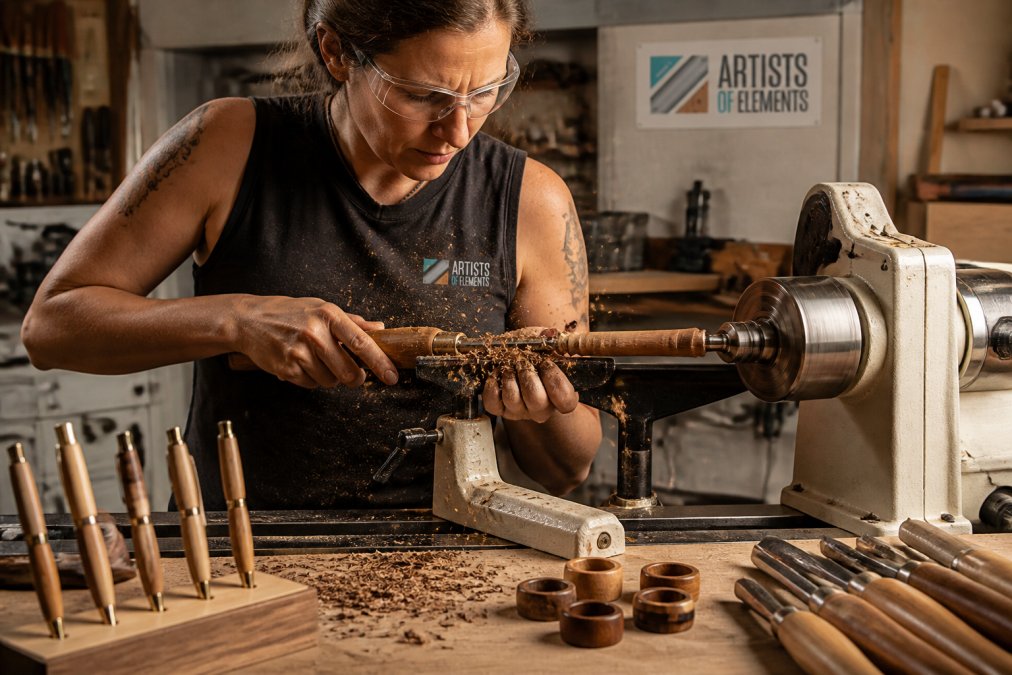
Custom work is where a woodworking studio earns its keep. You describe what you need, and a maker builds it to fit your space, your measurements, and your taste.
- Custom furniture built to your dimensions
- Built-ins that fit awkward walls and odd corners
- Custom frames for artwork you already own
- Laser engraved pieces for names, dates, and logos
- Wood word art cut on the scroll saw
- Handmade pens, rings, bottle stoppers, and wooden earrings
How to Support Local St. Petersburg Artists All Year
Buying local isn't a holiday gesture. It's a habit, and habits are what keep small studios open.
Pro TipBook a studio visit before you need a gift. Seeing the work in person makes it obvious what suits the people on your list, and you'll know what's on the bench before the holiday rush.
A few practical ways to keep the momentum going:
- Follow the studio and share pieces you like
- Commission one meaningful piece instead of five forgettable ones
- Take a workshop and learn what the work actually takes
- Buy birthday and anniversary gifts from makers, not from algorithms
- Tell the artist why you bought it. It matters more than you think
Frequently Asked Questions
Why is handmade art more meaningful than store-bought gifts?
A store-bought gift is one of thousands made to the same spec. Handmade art carries the maker's decisions: the wood they chose, the grain they worked around, the finish they sanded by hand. When you give a handmade wooden pen or a turned ring, you give something that exists once. The person receiving it owns the only one like it, and that is what makes it stick with them long after the wrapping paper is gone.
How does buying handmade art impact the local economy?
Money spent with a local maker stays in the community instead of routing through a national supply chain. It pays for materials bought nearby, keeps a studio's lights on, and funds the next round of work. That cycle supports the creative economy directly. When you support local St. Petersburg makers, you are funding a working artist, not a distribution warehouse, and the local revenue recirculates every time that artist buys supplies or hires help.
How do I know a piece is genuinely handmade and not mass produced?
Look for variation. Handmade pieces show small differences in grain, color, and finish because no two blanks are identical. Ask about the process: a real maker can tell you what wood they used, how they turned or carved it, and what finish went on top. Many studios also document their work on video. Artists of Elements, for example, films pieces being made on the Sawdust and Friends podcast, so you can watch a pen or ring come together before you buy it.
What can I commission from a local woodworking studio?
At Artists of Elements, commissions range from custom pens, rings, and bottle stoppers to wooden earrings, scroll saw wood word art, custom frames, laser engraved pieces, built-ins, and full custom furniture. Owner Ellen Newbauer is a master woodworker and former general contractor, so larger projects like cabinetry and built-ins are within reach. The studio is by appointment only, so call 727-420-7438 or visit www.artistsofelements.com to start a conversation about what you have in mind.