

Table of Contents
- Are Local Art Workshops Worth It? The Honest Verdict
- The Benefits of Art Workshops Beyond the Finished Piece
- Art Workshop vs. Online Class: What's the Difference?
- Beginner Art Classes: What Zero Experience Actually Looks Like
- What to Look For Before You Book a Workshop
- When a Workshop Is the Right Choice, and When It Is Not
- Conclusion: Are Local Art Workshops Worth It?
- Frequently Asked Questions
Last Updated: October 13, 2026
Are Local Art Workshops Worth It? The Honest Verdict
If you've ever considered taking an art or woodworking workshop but wondered whether it's worth the time and money, you're not alone.
With so many free tutorials available online, it's reasonable to ask what makes an in-person creative workshop different.
The answer is simple: hands-on experience, personal instruction, and the opportunity to try something new without investing in all the equipment yourself.
At Artists of Elements in St. Petersburg, Florida, our creative workshops give beginners an opportunity to work with real tools and materials in a welcoming environment.
As an experienced woodworker, I understand how intimidating it can feel to try a new skill. Everyone starts somewhere, and having someone nearby to demonstrate techniques, answer questions, and help when something doesn't go as planned can make a real difference.
Whether you're interested in pen turning, making handcrafted rings, painting wooden signs, or learning practical tool skills, a local workshop offers more than just a finished project. It's an opportunity to build confidence, explore your creativity, and discover what you enjoy.
In this guide, we'll look at the benefits of local art workshops, how they compare with online classes, what beginners can expect, and how to decide whether a workshop is right for you.

Key TakeawayThe value of a workshop is not the object you carry home. It is the correction you get in the moment, when a small mistake is still fixable.
The Benefits of Art Workshops Beyond the Finished Piece
One of the greatest benefits of attending a local art workshop is that you gain more than the project you take home. You also gain hands-on experience, practical knowledge, and the satisfaction of creating something yourself.
Learn Through Hands-On Experience
Watching someone demonstrate a technique is helpful, but actually using the tools and materials yourself is a different experience.
Whether you're shaping wood on a lathe, making a handcrafted ring, or painting a decorative sign, hands-on practice helps you understand how the process works.
Receive Personal Guidance
In a small workshop, an instructor can demonstrate techniques, answer questions, and help you correct mistakes as you work.
This is especially valuable when learning unfamiliar equipment or techniques that require attention to safety and proper handling.
Try Something New Without Buying Equipment
Woodworking and other creative hobbies can require specialized tools and supplies.
A workshop allows you to explore a new interest without purchasing expensive equipment before knowing whether you enjoy it.
At Artists of Elements in St. Petersburg, Florida, our beginner workshops provide the tools, materials, and instruction needed for the scheduled activity.
Enjoy a Creative, Social Experience
Art workshops bring people together through shared creativity. They offer opportunities to meet others, exchange ideas, and enjoy time away from everyday routines.
Some people attend on their own, while others come with friends, family members, or partners for a memorable experience.
Build Confidence Through Creating
There's something rewarding about starting with unfamiliar materials and seeing what you can accomplish.
You don't need to create a perfect project to have a successful workshop experience. Learning a new technique, solving a problem, or completing something with your own hands can be just as meaningful.
Take Home More Than a Finished Project
A handcrafted pen, decorative wooden sign, or ring can become a reminder of what you learned and the experience you enjoyed.
The real value of a local art workshop often comes from the combination of practical skills, personal guidance, creativity, and the satisfaction of making something yourself.
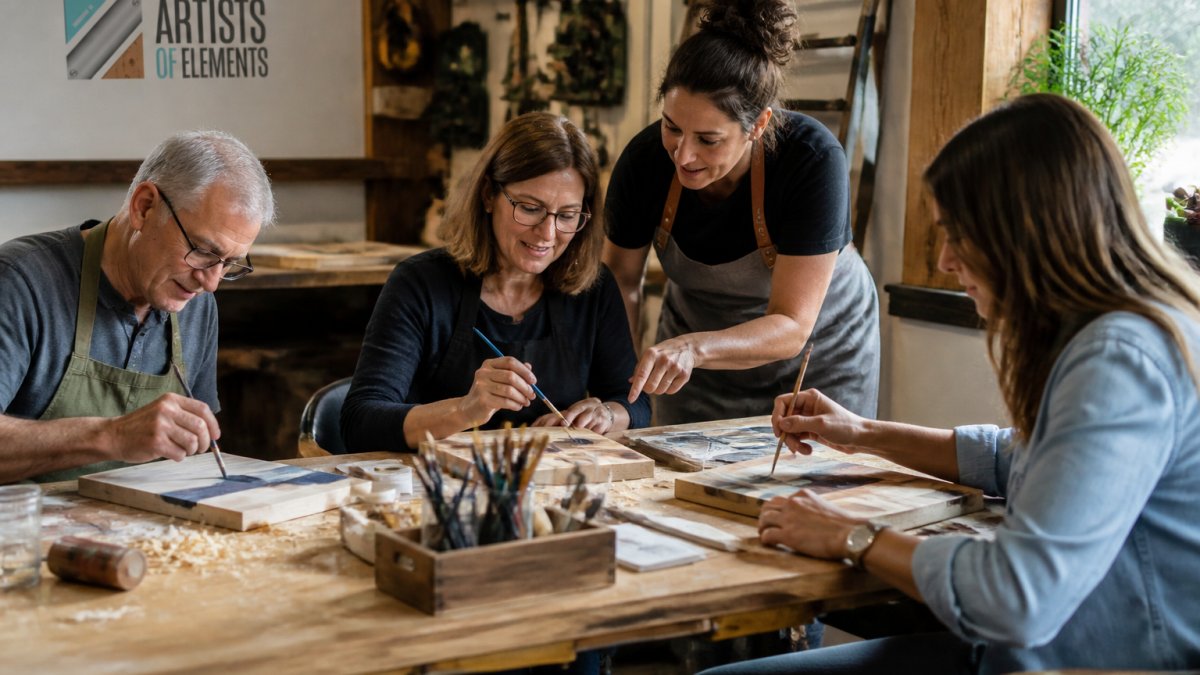
Art Workshop vs. Online Class: What's the Difference?
With thousands of free tutorials available online, you might wonder whether attending an in-person art workshop is worth the additional expense.
Both learning methods have advantages. The best choice depends on what you want to learn, how you prefer to learn, and whether the activity requires specialized equipment.
The Benefits of Learning Online
Online tutorials offer flexibility and convenience. You can watch demonstrations, pause instructions, repeat lessons, and learn at your own pace.
They're particularly helpful for exploring new creative interests, understanding basic techniques, and deciding whether a hobby appeals to you.
However, watching a demonstration isn't always the same as performing the technique yourself.
The Benefits of In-Person Workshops
An in-person workshop gives you the opportunity to work directly with tools and materials while receiving guidance from an experienced instructor.
For activities such as pen turning, ring making, and woodworking, having someone nearby to demonstrate proper techniques and answer questions can be especially valuable.
At Artists of Elements in St. Petersburg, Florida, our hands-on workshops allow beginners to experience creative activities without purchasing all the equipment themselves.
Comparing Your Options
Feature |
Online Tutorials |
In-Person Workshops |
|---|---|---|
Cost |
Often free or inexpensive |
Registration fee |
Schedule |
Learn at your own pace |
Scheduled sessions |
Equipment |
Usually purchased separately |
Often provided |
Instructor feedback |
Limited or delayed |
Immediate guidance |
Social interaction |
Usually independent |
Learn alongside others |
Hands-on practice |
Requires your own setup |
Part of the workshop |
Why Not Combine Both?
You don't have to choose one learning method exclusively.
Online videos can introduce you to a new craft, while a local workshop gives you an opportunity to practice techniques with guidance.
After attending a workshop, you can continue developing your skills through online resources and additional practice.
The Bottom Line
If you're exploring a hobby that requires little equipment, online tutorials may be a great starting point.
But if you want hands-on instruction, access to specialized tools, and the experience of creating something in a supportive environment, a local art workshop may be well worth the investment.
Beginner Art Classes: What Zero Experience Actually Looks Like
One of the biggest reasons people hesitate to sign up for an art or woodworking workshop is the fear that they won't know what they're doing.
The good news? You don't need previous experience to get started.
At Artists of Elements in St. Petersburg, Florida, our beginner-friendly workshops are designed to introduce participants to new skills in a welcoming, supportive environment.
Whether you've never used a wood lathe, made a ring, or painted a wooden sign, the goal is to help you learn while enjoying the creative process.
What Happens During Your First Workshop?
Most beginner workshops follow a simple process:
- Welcome and Introduction: You'll meet your instructor, learn about the activity, and become familiar with the workspace.
- Safety and Demonstration: For workshops involving tools or equipment, you'll learn important safety procedures and watch a demonstration before beginning.
- Hands-On Practice: You'll begin working with the materials and tools, following the instructor's guidance.
- Personal Assistance: Your instructor will answer questions, demonstrate techniques, and help you work through challenges.
- Finishing Your Project: Depending on the workshop, you'll sand, paint, polish, or assemble your creation.
- Take Home Your Work: In project-based classes, you'll typically leave with something you made yourself.
What If You Make a Mistake?
Mistakes are a normal part of learning something new.
Your first pen doesn't have to be perfectly shaped, and your painted sign doesn't need to look exactly like the example.
The important part is learning how to use the tools, understanding the process, and enjoying the experience.
Small Classes Make a Difference
Learning in a smaller group allows more opportunities to ask questions and receive individual attention.
At Artists of Elements, we focus on hands-on instruction so participants can learn at a comfortable pace.
Come Curious, Not Experienced
You don't need to consider yourself artistic or mechanically inclined to enjoy a creative workshop.
Sometimes discovering that you can do something you never imagined trying is the most rewarding part of the entire experience.
Art Workshop Duration: How Long Sessions Run and What Fits Your Week
Art workshop duration usually runs two to three hours, which is long enough to finish a small project and short enough to fit into an evening. But length alone tells you very little.
Most sessions fall into a few common lengths:
Session Type |
Typical Length |
What You Can Realistically Finish |
|---|---|---|
Intro workshop |
2 hours |
One small project with a demonstration and guided practice |
Standard class |
3 hours |
A full project start to finish, including finishing steps |
Extended session |
3+ hours |
Skills that need setup, drying, or curing time between steps |
Multi-week course |
2-3 hours per week |
A progression of related skills, not a single object |
A two-hour intro session is enough to learn one technique and leave with something finished. A three-hour session is usually the sweet spot for woodworking. Anything past three hours starts to test attention more than skill.
What a single session can and cannot teach. In one two-hour workshop, a beginner can reasonably learn to hold and control a tool, complete one small project, and understand the safety basics. What one session will not do is make you independent. Expect familiarity, not fluency.
Logistics that decide whether you actually show up. Duration is only half the scheduling question. The other half is everything around it:
- Location and travel. A two-hour class with a forty-minute drive each way is really a three-and-a-half-hour commitment. Check parking and transit before you book.
- Time of day. Weeknight sessions that run past 9 p.m. feel very different by week three than they did on day one. Weekend morning sessions tend to have the best attendance for a reason.
- Accessibility. Ask about step-free entry, seating, and whether the workspace can accommodate mobility aids or a standing desk setup.
- Age suitability. Many adult workshops are 18+, some allow teens with a guardian. Confirm before you bring anyone.
- What to bring. Some studios provide everything; others ask you to bring safety glasses, closed-toe shoes, or a dust mask. This is the single most common source of first-day friction.
Pro TipChoose a workshop based on the activity that interests you most, not just the length of the class. Two or three hours spent learning something you enjoy can be a rewarding way to spend an afternoon.
What to Look For Before You Book a Workshop
Not all creative workshops are the same. Before registering, it's worth taking a few minutes to make sure the experience matches your interests, skill level, and expectations.
Here are seven things to consider when choosing a local art or woodworking workshop.
1. Instructor Experience
Look for an instructor who understands the craft and can explain techniques clearly.
An experienced instructor should be able to demonstrate the process, answer questions, and help beginners feel comfortable working with unfamiliar materials or equipment.
Wood Sign Making Class — October 22, 6–9 PM — St. Petersburg Florida →
2. Class Size
Smaller workshops often provide more opportunities for individual instruction.
This is especially important for activities involving woodworking tools, lathes, or other specialized equipment.
3. Beginner-Friendly Instruction
If you're new to the activity, make sure the workshop welcomes beginners.
A good introductory class should explain what you'll learn, what you'll make, and whether previous experience is required.
4. Materials and Equipment
Check whether tools, materials, and finishing supplies are included in the registration fee.
At Artists of Elements in St. Petersburg, Florida, our beginner workshops provide the equipment and materials needed for the scheduled project, with optional upgrades identified separately when available.
5. Safety and Supervision
Safety should be a priority, particularly when working with power tools or woodworking equipment.
Look for workshops that include safety demonstrations, proper protective equipment, and instructor supervision.
6. Scheduling and Policies
Before booking, confirm the date, start time, duration, cancellation policy, and any age requirements.
If you're planning a special occasion or group activity, ask whether a separate session can be arranged.
7. What You'll Take Home
Some workshops focus on learning a skill, while others include a finished project.
For example, a beginner pen-turning experience allows participants to create a functional wooden pen, while a ring-making experience focuses on creating handcrafted rings.
Other classes, such as introductory power-tool instruction, may emphasize practical skills rather than a take-home project.
A Quick Checklist Before Registering
- Is the workshop suitable for my experience level?
- Are tools and materials included?
- How long does the session last?
- Will I receive hands-on instruction?
- What should I wear or bring?
- Will I take home a completed project?
- Do I understand the registration and cancellation policies?
Taking a few minutes to review these details can help you choose a workshop you'll feel comfortable attending.
The Bottom Line
The right workshop should offer clear expectations, appropriate instruction, and an activity you're genuinely excited to try. A welcoming environment and the opportunity to learn at your own pace can make the experience even more enjoyable.
When a Workshop Is the Right Choice, and When It Is Not
Local art workshops can be a wonderful way to explore your creativity, learn practical skills, and experience something new. However, the right learning environment depends on your interests, schedule, and personal preferences.
A Local Workshop May Be Right for You If:
- You want to try something new. A beginner workshop lets you explore woodworking, painting, or another creative activity without making a large investment in equipment.
- You enjoy hands-on learning. Some skills are easier to understand when you can practice them with an instructor nearby.
- You appreciate personal guidance. Having someone demonstrate techniques and answer questions can make learning less intimidating.
- You're looking for a creative experience. Workshops can be enjoyable activities for individuals, friends, couples, and families.
- You want time away from screens. Spending a few hours working with your hands can offer a refreshing change from everyday routines.
- You'd like to build practical skills. Learning to use a wood lathe, work with basic power tools, or finish a handmade project can give you knowledge to build upon.
When Another Learning Option Might Be Better
An in-person workshop isn't necessarily the best choice for everyone.
- You prefer learning entirely at your own pace. Online tutorials may offer more flexibility.
- Your schedule is unpredictable. A class with a fixed date and time may be difficult to attend.
- You already have the necessary equipment and experience. Independent practice or advanced instruction may be more appropriate.
- You're looking for a long-term course. A single introductory workshop may not provide the depth of instruction you need.
You Don't Have to Know Whether You'll Love It
One of the best reasons to attend a beginner workshop is simply curiosity.
You might discover a new hobby, develop an unexpected skill, or realize that a particular craft isn't something you want to pursue further. Either way, you've gained firsthand experience.
At Artists of Elements in St. Petersburg, Florida, our beginner-friendly creative workshops offer opportunities to explore woodworking, ring making, sign painting, and practical tool skills in a supportive setting.
The Bottom Line
A workshop doesn't have to lead to a lifelong hobby to be worthwhile. Sometimes the value is in learning something new, spending time with others, and discovering what you're capable of creating.
Conclusion: Are Local Art Workshops Worth It?
If you've ever wanted to try woodworking, painting, jewelry making, or another creative activity, a local art workshop can be a wonderful place to begin.
While online tutorials offer convenience, an in-person workshop provides something different: hands-on instruction, access to tools and materials, and the opportunity to learn alongside others.
The value isn't just in the finished project. It's in learning a new skill, gaining confidence, asking questions, and discovering what you enjoy creating.
At Artists of Elements in St. Petersburg, Florida, we believe creativity is for everyone, regardless of experience.
Our beginner-friendly workshops offer opportunities to explore:
- Pen Turning: Learn to use a wood lathe and create your own handcrafted writing pen.
- Date Night Ring Making: Design and create handcrafted rings during a memorable experience for two.
- Paint Your Own Sign: Add your personal touch to a decorative wooden sign.
- The Empowered Toolbox: Build confidence using common power tools while learning practical skills.
Whether you're looking for a new hobby, planning a creative date night, or simply wanting to try something different, there's something rewarding about making something with your own hands.
So, are local art workshops worth it?
If you value hands-on learning, personal instruction, and the satisfaction of creating something yourself, they certainly can be.
Explore our creative workshops at Artists of Elements and discover what you might enjoy making next.

Frequently Asked Questions
Are local art workshops worth the money?
Local art workshops can be worth the investment, especially if you enjoy hands-on learning. Registration often includes instruction, access to specialized tools, and materials for the activity. You also gain experience without having to purchase equipment yourself.
Do I need experience to attend an art workshop?
No. Many workshops are specifically designed for beginners. At Artists of Elements in St. Petersburg, Florida, we offer beginner-friendly experiences where participants can learn new techniques with instructor guidance.
How much do local art workshops cost?
Prices vary depending on the activity, materials, equipment, and length of the session. At Artists of Elements, our beginner pen-turning experience is $95 per person, while our Date Night Ring-Making Experience is $299 for two participants. Check the workshop registration page for current pricing and availability.
How long does a beginner art workshop last?
Many beginner workshops last approximately two to three hours, although some activities require more or less time. Our pen-turning experience typically takes 2½ to 3 hours, while our ring-making experience lasts approximately three hours.
What should I bring to an art workshop?
Requirements depend on the activity. For woodworking workshops, comfortable clothing and closed-toe shoes are important. Check the class description for specific instructions about clothing, safety equipment, and anything you may need to bring.
Can I attend an art workshop by myself?
Absolutely! You don't need to bring a friend or partner to enjoy most beginner workshops. Attending alone can be a great way to meet people, try something new, and spend time developing your creativity. Some experiences, such as ring-making date night, are designed for two participants.
Are art workshops good for couples or friends?
Yes! Creative workshops can make memorable experiences for couples, friends, and family members. Working on a project together offers an alternative to traditional outings and gives participants something meaningful to remember the occasion.
Will I take home something I made?
That depends on the workshop. Project-based experiences, such as pen turning, ring making, and wooden sign painting, are designed around creating an item. Other workshops, such as introductory power-tool instruction, focus primarily on learning practical skills.
Where can I find beginner art workshops in St. Petersburg, Florida?
Artists of Elements offers hands-on creative workshops in St. Petersburg, Florida, including woodworking, ring making, sign painting, and practical tool instruction. Visit Artists of Elements to explore upcoming experiences and registration details.
The hardest part of learning a craft is starting without anyone in the room to guide you. Artists of Elements gives you that room, with hands-on workshops, all materials included, and instructors who work alongside you from the first cut to the final finish. Browse our upcoming workshops and pick the session that fits your schedule.